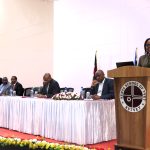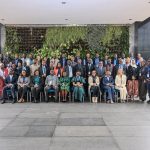
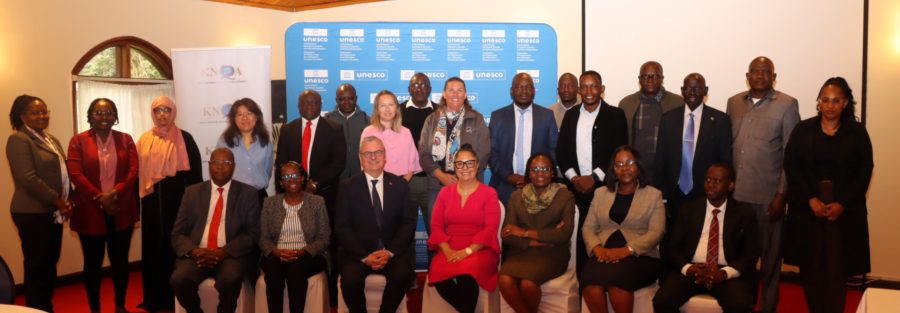
The Kenya National Qualifications Authority (KNQA), in partnership with the UNESCO Regional Office for Eastern Africa, successfully hosted the 4th UNESCO Qualifications Passport (UQP) Technical Advisory Group (TAG) Meeting in Nairobi. The meeting brought together regional and international experts, policymakers and development partners to strengthen qualifications recognition for refugees and forcibly displaced persons (FDPs).
The high-level two-day meeting is part of Kenya’s growing leadership in advancing inclusive and internationally connected qualifications systems that enable every learner to access education, skills development and employment opportunities regardless of their circumstances.
The Technical Advisory Group Meeting provided a strategic platform for participating countries to review progress in implementing the UNESCO Qualifications Passport, exchange experiences, identify emerging opportunities and challenges, and strengthen regional collaboration towards a trusted qualifications recognition ecosystem across Africa.
Opening the meeting, KNQA Director General/CEO, Dr. Alice Kande, pointed out the fundamental principle that education is a universal human right that should never be interrupted by conflict, displacement or the loss of academic documentation.
She observed that millions of displaced people around the world possess valuable knowledge, competencies and qualifications but are often unable to continue their education or participate meaningfully in labour markets because they cannot readily prove their academic achievements. Dr. Kande emphasized that innovative recognition mechanisms such as the UNESCO Qualifications Passport provide a practical and dignified solution to this challenge by enabling learners to have their qualifications, skills and competencies fairly assessed and recognised.
She further reaffirmed Kenya’s commitment to institutionalising the UNESCO Qualifications Passport as an important instrument for promoting access to education, technical and vocational training, and decent employment for refugees and forcibly displaced persons. Dr. Kande emphasized that recognising people’s learning achievements is an important educational imperative and a catalyst for social inclusion, economic empowerment and sustainable development.
The meeting convened representatives from qualifications authorities across the region, including the Zambia Qualifications Authority (ZAQA), the South African Qualifications Authority (SAQA), the Uganda National Examinations Board (UNEB), and South Sudan, alongside officials from Kenya’s Ministry of Education, UNHCR Kenya, the International Rescue Committee (IRC), Global University Academy, the World Bank Africa, UNESCO and other development partners committed to advancing education and skills recognition.
Throughout the first day, participants presented country updates on the implementation of the UNESCO Qualifications Passport while examining practical approaches to integrating the initiative within national qualifications systems and existing policy frameworks. The discussions highlighted the importance of strong institutional collaboration, harmonised standards and robust governance structures in ensuring that qualifications recognition systems remain accessible.
Key Areas of Focus
Qualifications Recognition
Strengthening trusted recognition systems for learners across Africa.
Regional Mobility
Supporting seamless movement of learners and professionals across borders.
Lifelong Learning
Promoting flexible learning pathways through inclusive qualifications systems.
Policy Collaboration
Aligning national and continental qualifications frameworks.
Delegates also explored strategies for strengthening regional cooperation, recognising that learner mobility continues to increase across Africa due to educational opportunities, labour migration and humanitarian crises. Participants agreed that effective qualifications recognition mechanisms are becoming increasingly essential for enabling learners and professionals to move seamlessly across borders while maintaining confidence in the quality and integrity of qualifications.
Complementary Frameworks
Importantly, the deliberations examined how the UNESCO Qualifications Passport complements broader continental and national initiatives aimed at enhancing lifelong learning and skills mobility. Participants explored important linkages between the UNESCO Qualifications Passport, the African Continental Qualifications Framework (ACQF), Recognition of Prior Learning (RPL), the Kenya Credit Accumulation and Transfer System (KCATS), and national qualifications frameworks.
These complementary frameworks collectively support flexible learning pathways by recognising learning acquired through formal, non-formal and informal settings, facilitating credit transfer, improving progression opportunities and promoting mutual recognition of qualifications across institutions and countries. Such integration is expected to significantly enhance academic mobility, workforce development and regional economic integration under the African Union’s broader development agenda.
Kenya’s Progress
Kenya showcased the progress made in implementing the Kenya National Qualifications Framework (KNQF), highlighting reforms that have strengthened transparency, comparability and quality assurance within the country’s qualifications system as well as referencing it to the African Continental Qualifications Framework (ACQF). The KNQF continues to provide an important foundation for recognising qualifications, facilitating learner progression, promoting quality and supporting labour market relevance through nationally coordinated standards.
Kenya also demonstrated its commitment to learning from regional experiences and international best practices while contributing its own innovations to continental efforts aimed at strengthening qualifications recognition. This collaborative approach reflects the country’s vision of building an education system that responds effectively to emerging global realities while leaving no learner behind.
Strengthening Partnerships
The Technical Advisory Group Meeting further reinforced the importance of partnerships among governments, qualifications authorities, international organisations, development partners, higher education institutions and humanitarian agencies in expanding access to quality education and skills recognition for displaced populations.
As Africa continues to deepen regional integration and promote free movement of people, skills and labour, trusted qualifications recognition systems will remain essential in unlocking opportunities for learners, professionals and employers alike. Initiatives such as the UNESCO Qualifications Passport demonstrate how innovative policy solutions can bridge educational disruptions, restore hope and empower individuals to rebuild their lives through education and meaningful employment.
The UNESCO Qualifications Passport Technical Advisory Group Meeting is Kenya’s response to the growing need for qualifications reform and reinforces KNQA’s commitment to building an inclusive, responsive, equitable, fair and globally connected qualifications ecosystem that advances lifelong learning, promotes learner mobility and contributes to sustainable socio-economic transformation across Africa.