



Nairobi, Kenya – 01 September 2026: The Kenya National Qualifications Authority (KNQA) has stepped up engagement with university leadership to accelerate the implementation of the Kenya National Qualifications Framework (KNQF) and the onboarding of universities, qualifications and graduate records onto the National Qualifications Database (NQD).
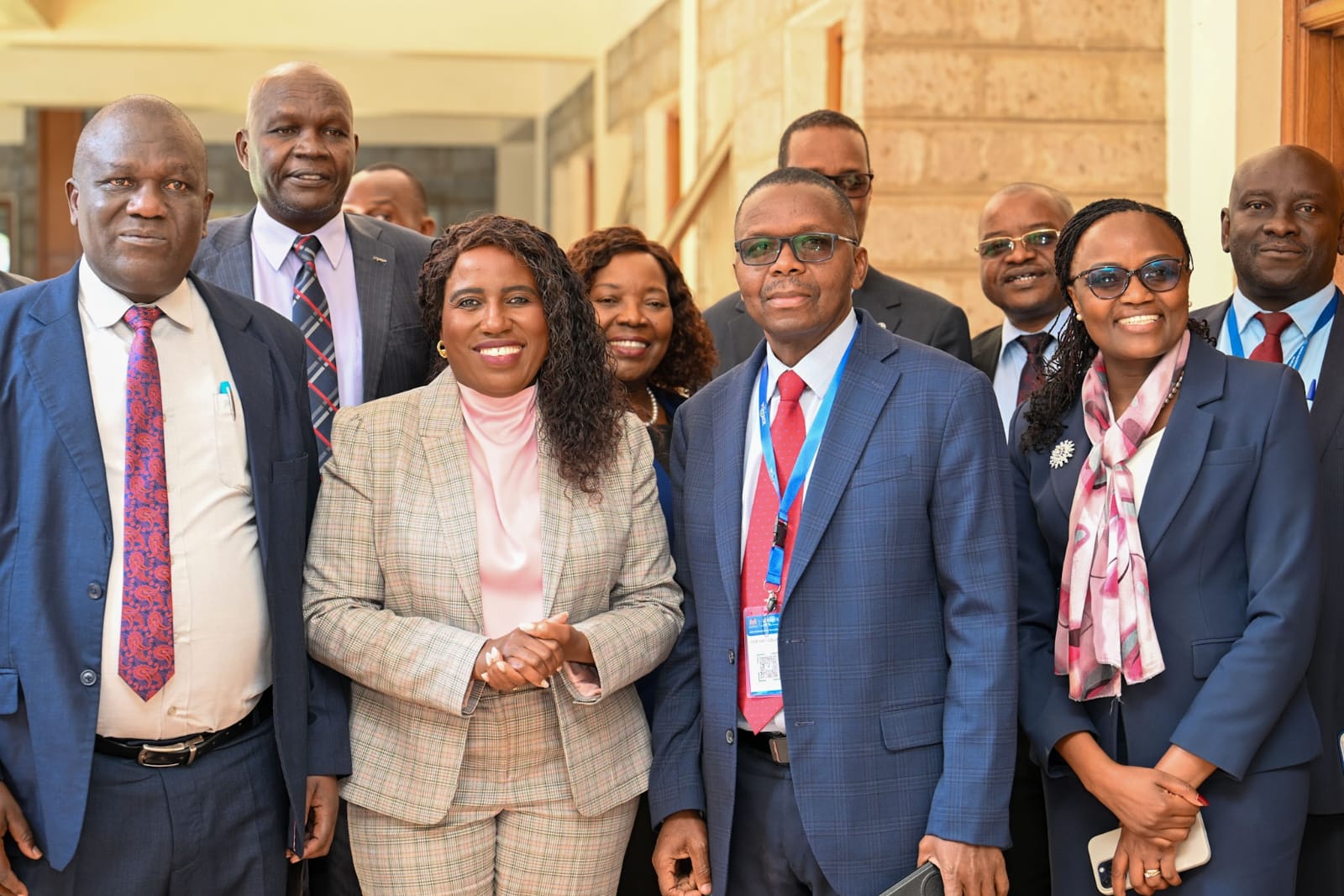
The high-level consultative meeting, convened by KNQA on 1 September 2026 at the Kenya Institute of Curriculum Development (KICD), brought together Vice-Chancellors, Deputy Vice-Chancellors, Principals, Deputy Principals and Registrars representing public and private universities across the country.
The meeting provided a platform for university leadership and key education and training sector stakeholders to deepen their understanding of the KNQF and NQD, clarify registration requirements and processes, address emerging concerns and agree on the practical steps required to strengthen implementation.
The engagement was officially opened by the Principal Secretary, State Department for Higher Education and Research, Dr Beatrice Inyangala, on behalf of the Cabinet Secretary for Education, Hon. Julius Migos Ogamba. The meeting was also attended by representatives of the Principal Secretaries, State Departments for TVET and Basic Education.
Other key stakeholders included the Commission for University Education (CUE), Technical and Vocational Education and Training Authority (TVETA), National Industrial Training Authority (NITA), Kenya Institute of Curriculum Development (KICD), the KNQA Council and university associations.
Building One Coherent Qualifications System
Kenya’s education and training landscape comprises multiple subsectors, including basic education, TVET, university education, professional qualifications and industrial training. While these subsectors have distinct mandates and regulatory arrangements, the KNQF provides a common national architecture through which qualifications can be classified, compared and connected.
The Framework, established under the Kenya National Qualifications Framework Act, 2014, provides a ten-level reference point covering qualifications across the Academic, TVET, Professional, and Skills sub-frameworks. KNQA maintains the National Qualifications Database as the central digital repository for qualifications and the learner records behind them.
Speaking during the engagement, Dr Inyangala emphasised the importance of universities in ensuring that Kenya develops a coherent, credible and internationally competitive qualifications system, highlighting their role in producing professionals, researchers, innovators and leaders whose qualifications carry significance both nationally and internationally.
She further clarified that the roles of CUE and KNQA are complementary, with CUE undertaking its statutory responsibility for regulation and quality assurance of university education while KNQA provides the overarching national framework connecting university qualifications with qualifications from other education and training pathways.
The Ministry therefore called upon university leadership to provide institutional support and prioritise implementation of the KNQF and NQD.
From Accreditation to National Recognition
A key message emerging from the engagement was the distinction between sector-based accreditation and national qualifications registration.
KNQA Director General/CEO, Dr Alice Kande, explained that the Authority is not seeking to reaccredit universities or duplicate the work of CUE. Rather, registration gives an accredited qualification its place within the national qualifications system and ensures that it is captured in the NQD.
The practical process involves accreditation or approval of an institution and its programmes by the relevant sector regulator, followed by submission of the approved qualifications to KNQA for registration. The qualifications are then classified and entered into the NQD, after which graduate records are submitted and maintained to support verification and national reporting.
This distinction is critical to building a trusted qualifications ecosystem in which sector regulators continue to fulfil their respective mandates while qualifications are connected through a single national framework.
Closing the Implementation Gap
The engagement also highlighted the progress made as well as the significant ground that remains to be covered.
Dr Inyangala noted that, at the time of the meeting, only 22 per cent of universities had been registered as Qualification Awarding Bodies (QABs) on the NQD, while registration of qualifications stood at 12 per cent and graduate records at 34 per cent. These figures, she observed, demonstrate the need to accelerate implementation across the university sector.
Dr Kande provided further context, noting that KNQA had registered 75 Qualification Awarding Bodies, including 19 universities, with these universities having collectively registered more than 500 qualifications.
She, however, emphasised that registration as a QAB is only the beginning. Universities need to progress towards registering their full portfolio of accredited qualifications and submitting corresponding graduate records to ensure that the NQD provides a complete and reliable national record.
The CEO also pointed out that universities offering both university and TVET programmes should submit all qualifications approved or accredited by the relevant regulators. This includes university qualifications accredited by CUE and TVET qualifications accredited by TVETA and offered within universities.
A recurring message throughout the engagement was that implementation of the KNQF and NQD should not be viewed merely as an administrative or compliance exercise.
The NQD is intended to provide Kenya with a reliable national record of qualifications and graduate achievements. Such information is critical for education and skills planning, identifying skills gaps, responding to labour-market needs and informing national policy. It also strengthens qualification verification, protects the integrity of awards and enhances the transparency and comparability of Kenyan qualifications nationally and internationally.
Participation in the system presents opportunities for universities to strengthen institutional credibility and reputation, enhance the visibility and comparability of their qualifications, support graduate mobility and employability, and provide reliable evidence for institutional and national planning.
KNQA Council Chairperson, Hon. Stanley Kiptis, emphasized this broader institutional responsibility, noting that a university’s responsibility does not end when a certificate is issued. It extends to ensuring that qualifications and graduate achievements can be authenticated years after graduation and are correctly classified and visible to employers, regulators, learners and international partners.
Connecting Education, Skills and Work
The consultative meeting also explored how the KNQF can facilitate more seamless progression and mobility across Kenya’s education and training system.
PS TVET, Dr Esther Muoria, represented by Ag. TVET Secretary, Eng. Joseph Njau, emphasised that the traditional boundaries between university and TVET education are increasingly interconnected, noting that several universities host TVET institutes, colleges, centres and directorates offering certificate and diploma qualifications alongside university degree programmes.
The KNQF provides a common platform for connecting these learning pathways through articulation, progression, credit accumulation and transfer, Recognition of Prior Learning (RPL), lifelong learning and mobility between education, training and the world of work.
This means that a learner’s journey need not be constrained by institutional or subsector boundaries. Whether learning begins in TVET, university education, the workplace or another recognised pathway, the national system should enable that learning to contribute meaningfully towards further education, employment and lifelong learning.
The meeting placed university leadership at the centre of efforts to accelerate implementation.
The consultative engagement focused on the structure and implementation of the KNQF, the NQD, registration of universities and accredited programmes, onboarding of graduate records, progression pathways, including RPL and micro-credentials, and the roadmap and respective roles for implementation.
The KNQA Council Chairperson called on university Councils, Senates and management teams to provide clear institutional leadership by establishing internal accountability, designating senior focal persons, approving realistic implementation schedules and ensuring that outstanding qualifications and graduate records are submitted.
KNQA, on its part, reaffirmed its commitment to a phased and facilitative approach. The Authority will provide technical guidance, registration checklists, data templates, portal support and institution-specific follow-up, while continuing to work with CUE, TVETA and other relevant sub-sector regulators to strengthen information sharing and minimise unnecessary duplication.
Celebrating Progress
An important highlight of the engagement was the issuance of Qualification Awarding Body Registration Certificates to a number of institutions.
The certificates represent a significant milestone in the institutions’ participation in the national qualifications system and demonstrate the growing commitment by universities to ensuring that their qualifications are formally positioned within the KNQF and captured in the NQD.
The registration of universities, qualifications and graduate records is ultimately aimed at ensuring that every genuine qualification has a verifiable national record and that graduates can have confidence that their achievements remain protected and recognisable.

A Collective National Responsibility
The consultative engagement reinforced the understanding that the implementation of the KNQF and NQD is a shared national responsibility requiring sustained collaboration among universities, regulators, government agencies, employers and other stakeholders.
KNQA’s goal has remained clear that every recognised university should be registered as a Qualification Awarding Body; every accredited programme should be registered as a national qualification; and graduate records should be accurately captured and maintained in the NQD.
As Dr Kande observed, the success of the Framework depends on the participation of universities, while the credibility of the NQD depends on the completeness and accuracy of the information institutions provide.
The engagement therefore marks the beginning of an important step in a continuing national conversation on qualifications integrity. Kenya is laying the foundation for a qualifications system in which learning can be trusted, qualifications can be verified, learners can move more easily across pathways, and graduates can carry their achievements with confidence wherever opportunity takes them.