Kenya has taken a decisive step towards transforming its qualifications ecosystem with the dissemination of the National Situational Analysis (SITAN) Report on Micro-Credentials, marking the beginning of a coordinated national reform process.
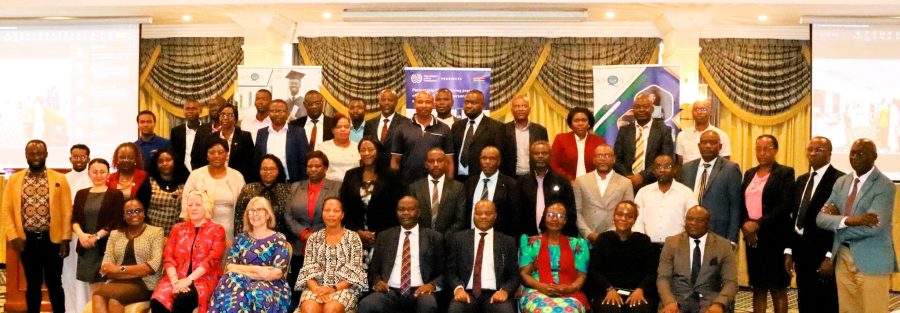
Convened by the Kenya National Qualifications Authority (KNQA) on Friday 27th March 2026 in Nairobi, the high-level breakfast meeting brought together Government, industry, qualifications awarding bodies, and development partners to chart a unified pathway for integrating micro-credentials into the Kenya National Qualifications Framework (KNQF).
This milestone event not only unveiled critical findings but also marked the formal inauguration of a 𝗧𝗲𝗰𝗵𝗻𝗶𝗰𝗮𝗹 𝗪𝗼𝗿𝗸𝗶𝗻𝗴 𝗖𝗼𝗺𝗺𝗶𝘁𝘁𝗲𝗲 (𝗧𝗪𝗖) to spearhead the development of 𝗞𝗲𝗻𝘆𝗮’𝘀 𝗡𝗮𝘁𝗶𝗼𝗻𝗮𝗹 𝗠𝗶𝗰𝗿𝗼-𝗖𝗿𝗲𝗱𝗲𝗻𝘁𝗶𝗮𝗹𝘀 𝗙𝗿𝗮𝗺𝗲𝘄𝗼𝗿𝗸, anchoring the country firmly on the path of agile, inclusive, and demand-driven skills development.
At the heart of this progress is a strong and strategic partnership. The International Labour Organization (ILO) played a pivotal role by engaging Ms. Oonagh McGirr, Director of the World Alliance for Micro-Credentials, who worked collaboratively with the KNQA technical team and the Commonwealth of Learning (COL) to undertake the national survey and produce the SITAN Report. This collaboration has provided Kenya with a robust evidence base and global benchmarking insights to guide policy development.
Delivering a keynote address on behalf of the Principal Secretary – State Department for TVET, the Ag. Secretary – Mr. Joseph Njau underscored that micro-credentials are no longer optional but essential in responding to a rapidly evolving world of work. Positioned as a catalyst for lifelong learning, workforce competitiveness, and inclusion, micro-credentials will enable continuous upskilling, particularly in emerging sectors such as the digital, green, and blue economies.
The KNQA Council Chairperson, Hon. Stanley Kiptis highlighted the global momentum and strategic necessity of micro-credentials, noting their successful integration across advanced qualification systems worldwide. He emphasized that embedding micro-credentials within the KNQF will safeguard quality, enable credit accumulation, enhance portability, and address persistent skills mismatches that continue to constrain youth employability.
In her remarks, the Director General/CEO of KNQA, Dr. Alice Kande framed the moment as a defining inflection point in Kenya’s qualifications landscape. While acknowledging the strength of the existing KNQF architecture, she identified a critical regulatory gap in the formal recognition of micro-credentials.
She further called for accelerated policy coherence, strengthened digital credentialing infrastructure, and alignment with regional and global frameworks to ensure portability and recognition of Kenyan qualifications. Collectively, the deliberations reinforced a clear national direction:
‘𝘒𝘦𝘯𝘺𝘢 𝘪𝘴 𝘮𝘰𝘷𝘪𝘯𝘨 𝘥𝘦𝘤𝘪𝘴𝘪𝘷𝘦𝘭𝘺 𝘵𝘰 𝘪𝘯𝘵𝘦𝘨𝘳𝘢𝘵𝘦 𝘮𝘪𝘤𝘳𝘰-𝘤𝘳𝘦𝘥𝘦𝘯𝘵𝘪𝘢𝘭𝘴 𝘢𝘴 𝘢 𝘴𝘵𝘳𝘢𝘵𝘦𝘨𝘪𝘤 𝘦𝘯𝘩𝘢𝘯𝘤𝘦𝘮𝘦𝘯𝘵—𝘯𝘰𝘵 𝘢 𝘳𝘦𝘱𝘭𝘢𝘤𝘦𝘮𝘦𝘯𝘵—𝘰𝘧 𝘦𝘹𝘪𝘴𝘵𝘪𝘯𝘨 𝘲𝘶𝘢𝘭𝘪𝘧𝘪𝘤𝘢𝘵𝘪𝘰𝘯𝘴, 𝘪𝘯𝘵𝘳𝘰𝘥𝘶𝘤𝘪𝘯𝘨 𝘧𝘭𝘦𝘹𝘪𝘣𝘪𝘭𝘪𝘵𝘺, 𝘮𝘰𝘥𝘶𝘭𝘢𝘳𝘪𝘵𝘺, 𝘢𝘯𝘥 𝘳𝘦𝘴𝘱𝘰𝘯𝘴𝘪𝘷𝘦𝘯𝘦𝘴𝘴 𝘪𝘯𝘵𝘰 𝘵𝘩𝘦 𝘒𝘕𝘘𝘍’.
The event therefore marked the beginning of a coordinated national reform agenda, one that positions micro-credentials as a powerful lever for employment creation, productivity, inclusion, and lifelong learning.