
Nairobi | 17 November 2026: The Kenya National Qualifications Authority (KNQA) and the International Labour Organization (ILO) have commenced the next phase of collaboration towards operationalising the National Micro-Credentials Framework, following a physical inception meeting held at the Authority’s offices in Nairobi.
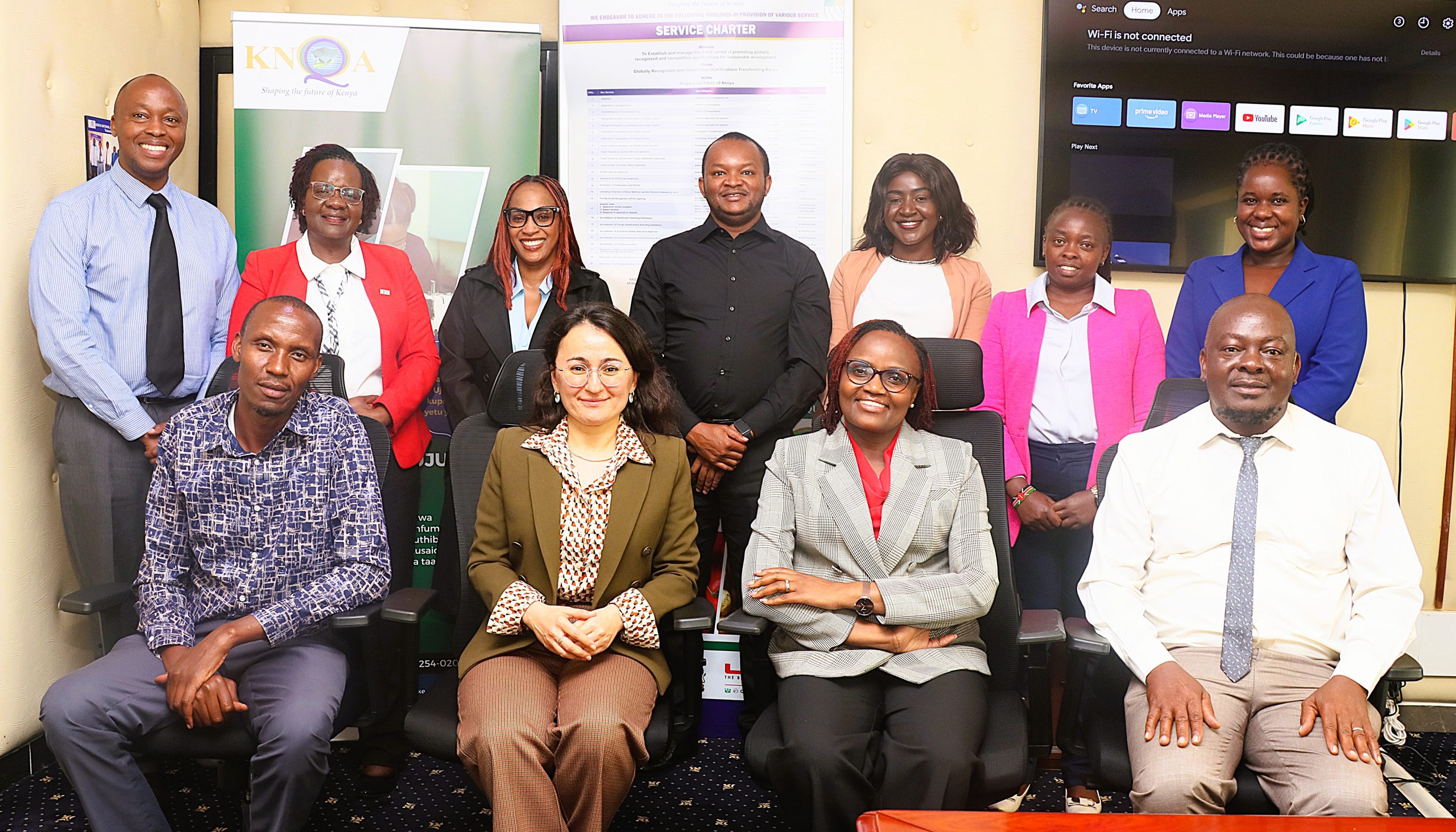
The meeting brought together the two institutions to discuss and agree on the implementation work plan, key deliverables, timelines and coordination arrangements under the implementation agreement for the operationalisation of the Kenya National Micro-Credentials Framework.
The engagement also provided KNQA with guidance from ILO on financial reporting structures, monitoring and evaluation, as well as communication and reporting arrangements to ensure effective implementation, accountability and tracking of progress throughout the assignment.
The seven-month implementation partnership seeks to obtain technical and policy inputs from stakeholders, build consensus on the draft framework, refine it, pilot its implementation and undertake final validation towards its adoption and integration into national qualifications policies.
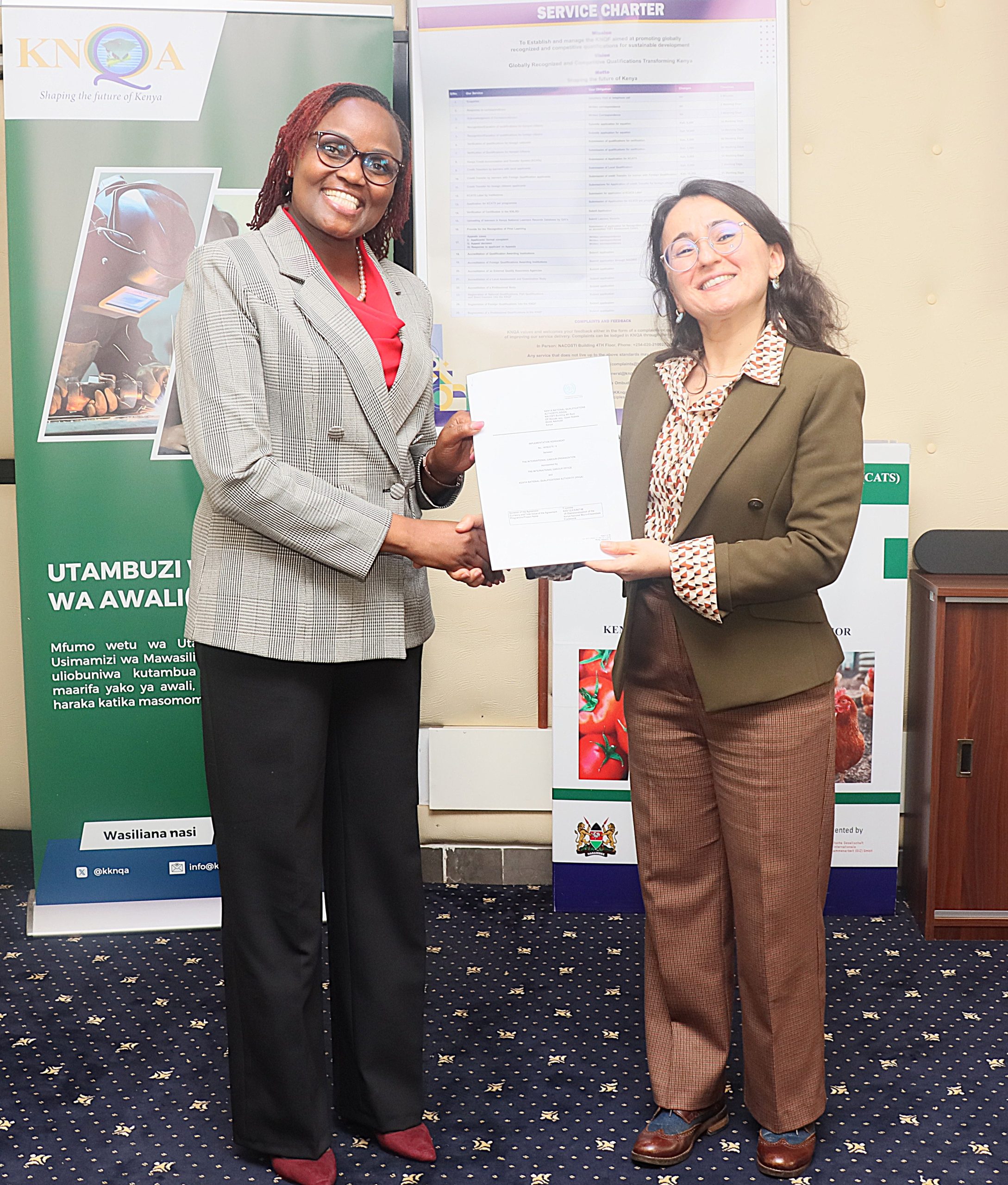
Key activities under the agreement include stakeholder consultations involving government institutions, Qualification Awarding Bodies, professional and regulatory bodies, industry, employers, workers, learners and other relevant groups; refinement of the framework; capacity building for implementers; and piloting in selected counties, including Turkana and Garissa. The process will culminate in the finalisation, approval and dissemination of the National Micro-Credentials Framework.
The framework is expected to expand access to flexible and modular learning opportunities for youth, workers, women, persons with disabilities, refugees and individuals in the informal economy. By integrating micro-credentials with Recognition of Prior Learning (RPL) and Credit Accumulation and Transfer Systems (CATS), learners will be able to progressively accumulate and transfer credits towards full qualifications.
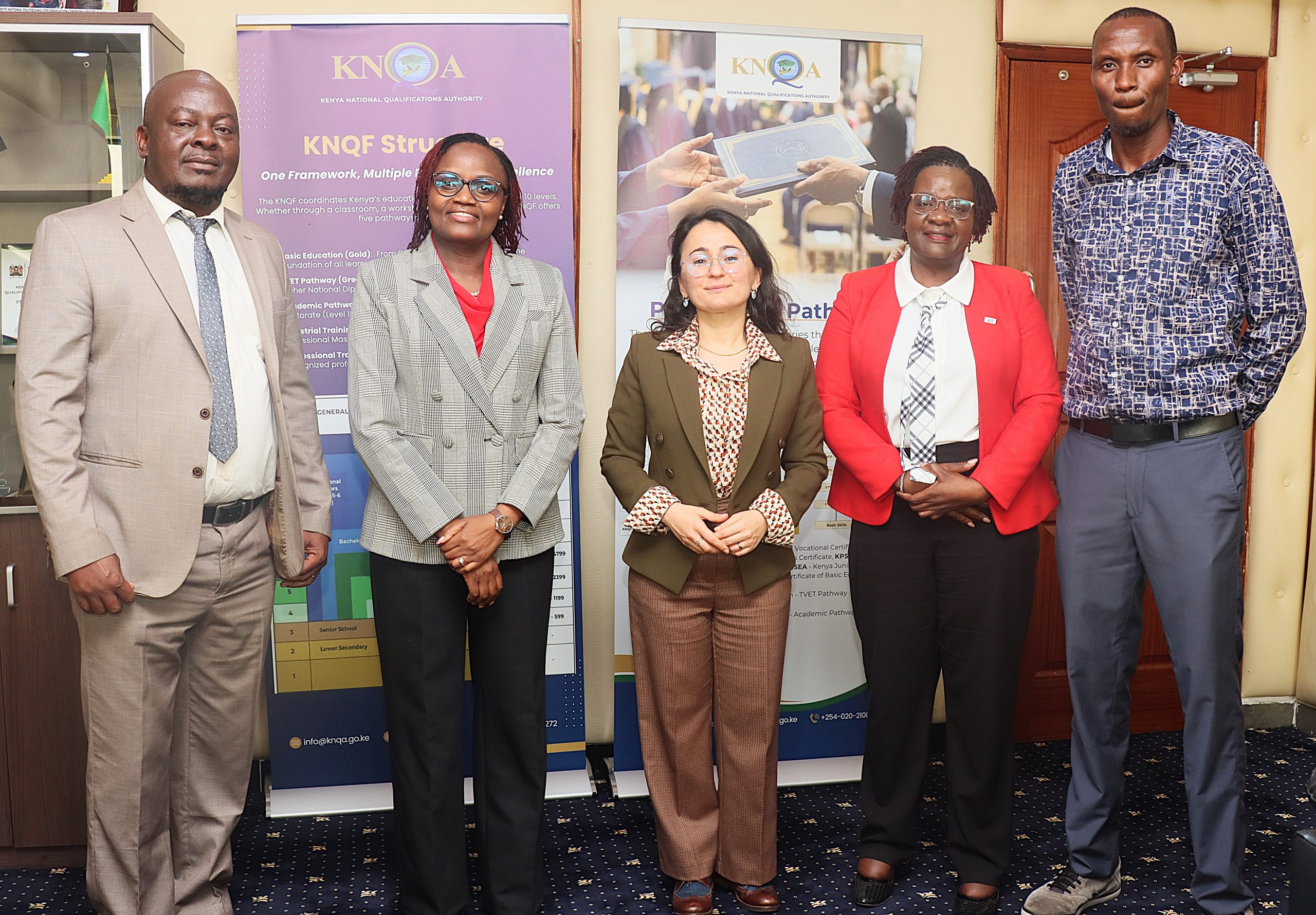
The initiative is also expected to strengthen lifelong learning, upskilling and reskilling, enhance learner progression and mobility, improve employer confidence in micro-credentials, and promote stronger alignment between education, training and labour market needs.
Through its partnership with ILO, KNQA continues to advance innovative, flexible and inclusive learning pathways that respond to the evolving skills needs of the labour market and support the implementation of the Kenya National Qualifications Framework (KNQF).